Powered By Blogger

Wednesday, November 29, 2006

Open source science: Model for Innovation

In a perfect world, scientists share problems and work together on solutions for the good of society. In the real world, however, that's usually not the case. The main obstacles: competition for publication and intellectual property protection.

Is there a model for encouraging large-scale scientific problem solving? Yes, and it comes from an unexpected and unrelated corner of the universe: open source software development.


Sharing helps everyone to do better; if you don't believe it, ask a grade schooler. This turns out to be true in business as well. There was study not long ago (I don't have a link) that found the people who cooperate with others do better at work than people who keep their work private.

Thursday, November 16, 2006

Images of the brain and universe


These aren't particularly new but I don't remember posting them. The first picture is a slice of tissue of the brain of a mouse. Note the fractal structure. Mark Miller from Brandeis did this.

The second picture is of a simulation of the beginning of the universe showing large cluster of galaxies surrounded by stars, galaxies and dark matter. Pretty amazing similarity, huh?

Tuesday, November 14, 2006

Bruce Schneier: Wrong on this one

I often read Bruce Schneier's blog because he covers topics in security and cryptography. His security ideas are often on target but miss the point. (He's concerned with the security devices and often fails to account for psychology and why people do what they do. More on that another time.) His posts on cyptography are another story. These are usually excellent and insightful. You should read these, but skip the security posts.

Tonight, I saw the following:

The Inherent Inaccuracy of Voting

In a New York Times op-ed, New York University sociology professor Dalton Conley points out that vote counting is inherently inaccurate:

The rub in these cases is that we could count and recount, we could examine every ballot four times over and we'd get -- you guessed it -- four different results. That's the nature of large numbers -- there is inherent measurement error. We'd like to think that there is a "true" answer out there, even if that answer is decided by a single vote. We so desire the certainty of thinking that there is an objective truth in elections and that a fair process will reveal it.

But even in an absolutely clean recount, there is not always a sure answer. Ever count out a large jar of pennies? And then do it again? And then have a friend do it? Do you always converge on a single number? Or do you usually just average the various results you come to? If you are like me, you probably settle on an average. The underlying notion is that each election, like those recounts of the penny jar, is more like a poll of some underlying voting population.

He's right, but it's more complicated than that.

That's a quote from Schneier's blog. I was mortified to see that Schneier agreed with Conley who obviously has no idea what he's talking about. If you have a jar of pennies you can count them exactly. The fact that the one counting may make mistakes is a fault of the process. To correct that, you need a better process.

Here's how one person put it in the comments:

I don't think that Dalton Conley has ever counted a large jar of pennies.

If your count doesn't converge on a single number, then you aren't doing it correctly. Clear a large flat surface. Create stacks of 10 pennies. Group the stacks of 10 by 10s. Collect the groups of 100 by 10. Check the stacks, check the groups, check the collections. Check again. Have your friend repeat the checks. Resolve any discrepancies.

This is accounting, not quantum physics. The pennies are all on the table in front of you and if you can't get an accurate accounting, you aren't trying hard enough.

This fellow, Ray, made me smile.

Sunday, November 12, 2006

Astonomy Picture of the Day

I go to this site just about everyday. I don't always post their pictures, but oftentimes the pictures are too beautiful not to post. Here's one that I like:


From the site:
Three thousand light-years away, a dying star throws off shells of glowing gas. This image from the Hubble Space Telescope reveals the Cat's Eye Nebula to be one of the most complex planetary nebulae known. In fact, the features seen in the Cat's Eye are so complex that astronomers suspect the bright central object may actually be a binary star system. The term planetary nebula, used to describe this general class of objects, is misleading. Although these objects may appear round and planet-like in small telescopes, high resolution images reveal them to be stars surrounded by cocoons of gas blown off in the late stages of stellar evolution.
You've got to admit, this is simply gorgeous. Ah, nature, where beauty is ever-present and ever delightful.

Tuesday, November 07, 2006

Heads UP!


What do you see? If you're my pal Andy you probably see an asteroid heading straight for planet Earth. Kiss yourself good-bye!

If you're not him, then maybe you see Janus, one of the moons of Saturn.
Janus orbits Saturn and sometimes trades places with its sister moon Epimetheus. Janus has a largest diameter of about 190 kilometers and while covered with large craters lacks small craters. One possible reason for this is a fine dust that might cover the small moon, a surface also hypothesized for Pandora and Telesto. Pictured above, Janus was captured in front of the cloud tops of Saturn in late September.

If you're like my pal though, you needn't worry. I'm sure we'll find a way to disrupt our lives without need for celestial malfeasance.

Monday, November 06, 2006

Experience at the Apple Store

My IPOD shuffle would not be recognized when I plugged it into a USB port on any computer I tried; I tried at least three times.

So, I finally took it to the Apple store yesterday in Bethesda, Maryland. The store is open and we walk in. It's a small store, most space is for product display. I walk to the back and see a fellow behind a counter and a line in front. I start to wait but see a screen with names. I infer there is some sort of sign up computer in the front. I wonder around and find a woman, in her fifties, with an apple shirt and she looks like an employee.

She: Can I help you?
Me: Yes, my ipod won't charge or be recognized when I plug it in.
She: Yes, I've seen that before.
Me: Can you fix it?
She: How long have you had it?
Me: I got it around Jan or Feb.
She: Oh, then it's still under warranty.

Me: Can you look at it and tell me if you can fix it?
She: Do you have an appointment?
Me: Well, no, do I need an appointment?
She: Yes, you do.
Me: Can't I just drop it off and whenever it's ready I can come back. I am already here, in person. It's not working so leaving it is fine with me.
She: No, you have to have an appointment.
Me: I can't drop it off?
She: No. You need an appointment and we're filled for today. It's like getting your car fixed, you have to have an appointment.

Me: Well, no I don't. There's a key drop and I can just drop my car off for repairs. Can't I do that here?
She: You must know the mechanic.

Me: pause....
She: Would you like me to help you make an appointment?
Me: Sure, that would be great.
She: Here. (She hands me a card.) Go to this website and you can make an appointment there.
Me: This is nuts. (I walk out.)

Wednesday, November 01, 2006

How Things Work Home Page

I stumbled across this link while using "Stumble Upon" when I was on the phone a few minutes ago. Here's a sample of the questions, you'll have to visit the site to get the answers.

1547. If I were to heat up a brownie and a white piece of cake, would the brownie heat up faster by radiation transfer because of its darker color? — B

1546. How can light "travel" through a vacuum when there were no "particles" in the vacuum on which it could "transmit" its charge? — DC

For my industrial design project, I am redesigning the microwave oven and adding some extra functions. Is it possible for microwaves to somehow measure food properties such as calories, sugar, salt, vitamins, and fat content? How can I translate those readings onto an LCD display so that the user can see them, and can they also be transferred to a computer via Bluetooth? — IB

1544. If something is coasting or moving at a steady pace, is it experiencing a net force of zero? — NP

1543. Can/should a microwave be disposed with the normal trash, what if any are the environmental impacts of the magnetron or other parts sitting in a landfill? — DNR

1542. Why do deep water wells need a pump at the bottom rather than one at the top? — LG, Vancouver

Tuesday, October 31, 2006

Hubble is saved!

NASA's most famous observatory, the Hubble Space Telescope, will get a much anticipated life extension after all. NASA Administrator Michael Griffin announced on Tuesday that a space shuttle will be sent to upgrade Hubble and add a few years to the lifetime of the venerable queen of the sky.

"We are going to add a shuttle servicing mission to the Hubble Space Telescope to the shuttle's manifest to be flown before it retires [in 2010]," Griffin said to applause at NASA's Goddard Space Flight Center in Greenbelt, Maryland, US.

The move, though not unexpected, still had astronomers on the edge of their seats. The telescope is enormously popular and has brought back a wealth of data since its launch aboard a space shuttle in 1990.

"The Hubble Space Telescope has been the greatest telescope since Galileo invented the first one," said US Senator Barbara Mikulski, who pushed NASA to reconsider a final servicing mission.

Now we can find out ever so more about the cosmos. Kudos to NASA for a good decision.

Thursday, October 26, 2006

Sexsomniac

THE first time it happened, Lisa Mahoney woke up to her boyfriend trying to have sex with her. "What are you doing?" she said, pushing him off.

"You started it," he said.

A few years later, a friend of hers crashed in her bed one night. The next morning he told her that she had made sexual advances toward him in her sleep.

Now, eight years after the first incident, Mahoney has a different boyfriend. She attacks him nearly every night they share a bed, aggressively trying to initiate sex - and remembers none of it in the morning.

This is strange but I'm sure it's quite true.

If you have ugly children, you're beautiful

Sexy males sire dowdy daughters and attractive females bear insipid sons – in fruit flies, at least.

This perverse pattern of inheritance may be one reason why not all individuals are highly attractive. It may even help explain why many of the showiest sexual displays are found in birds and butterflies, rather than other organisms.

The paradox arises because many of the traits that enhance a male's reproductive success are detrimental to female success, and vice versa. For example, female flies that devote a lot of time to feeding may have more energy to put into egg-laying, whereas males may do better spending more of their time mating instead.

So, let's hope the converse isn't true: If you have beautiful offspring, does that mean you're ugly?
I have three beautiful children, I guess I know why now.

Birth control: IUDs better than the Pill?

IT'S a tricky question for women in stable relationships. Do you stay on the pill, even though prolonged use slightly raises the risk of heart disease and other conditions, or do you switch to a less effective contraceptive? Now it seems there is an alternative.

Anneli Pouta at the University of Oulu, Finland, and colleagues studied 2814 women, all aged 31, taking the combined pill, no hormonal contraceptive or fitted with an intrauterine device (IUD) that releases small doses of progesterone into the womb.

Women on the combined pill had higher blood pressure, cholesterol and insulin levels than those who were not. Women fitted with IUDs, which are more than 99 per cent effective at preventing pregnancy, had none of these problems, probably because hormones are released locally rather than into the general circulation, Pouta says.

So, for young women the pill is fine. After the age of 40 the IUD seems the better choice.

Mars Rover: Getting moving


The Mars rover is starting to move again after spending the Martian winter hunkered down. Above is a panaromic picture of the red planet.

Wednesday, October 25, 2006

Printing on water

I forgot to post this. The link is from an email and I found that email tonight while sorting out my folder.

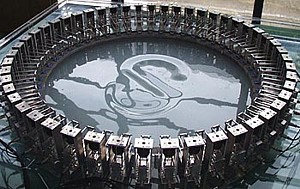
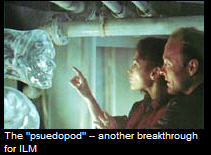
Just looking at this, a letter on the surface of water, gives me chills. Do you remember the movie The Abyss? Remember the scene where the deep sea creatures manipulate water, "at the molecular level" to quote one character?

Carl Sagan Videos

Click the link to start to view Carl Sagan's Cosmos series television shows.

Enjoy!

(hat tip: Ilachina)

Science: Professionals only?

Here's an article from Slate magazine where a sociologist, Harry Collins, was able to answer questions on gravitational waves as well as researchers in the field.

In a recent experiment of his design, British sociologist Harry Collins asked a scientist who specializes in gravitational waves to answer seven questions about the physics of these waves. Collins, who has made an amateur study of this field for more than 30 years but has never actually practiced it, also answered the questions himself. Then he submitted both sets of answers to a panel of judges who are themselves gravitational-wave researchers. The judges couldn't tell the impostor from one of their own. Collins argues that he is therefore as qualified as anyone to discuss this field, even though he can't conduct experiments in it.

The article (weakly) argues that maybe non-scientist can participate in scientific debates and understand science. This idea though is very misleading.

To begin, the idea that non-scientists cannot debate with scientists is true. To truly debate the merits of a theory (not a theorem that is true or is not true, and please don't post about Godel!) each debater needs to know the theorem and have an insight into the field.

But, and here's the point, if the so-called non-scientist knows enough to debate other scientists, then he's not a non-scientist at all. He's a scientist, pure and simple. One need not have a degree to be a scientist. What's more, one doesn't have to know mathematics to be a scientist either.

(Hat tip: Ilachina)

Monday, October 23, 2006

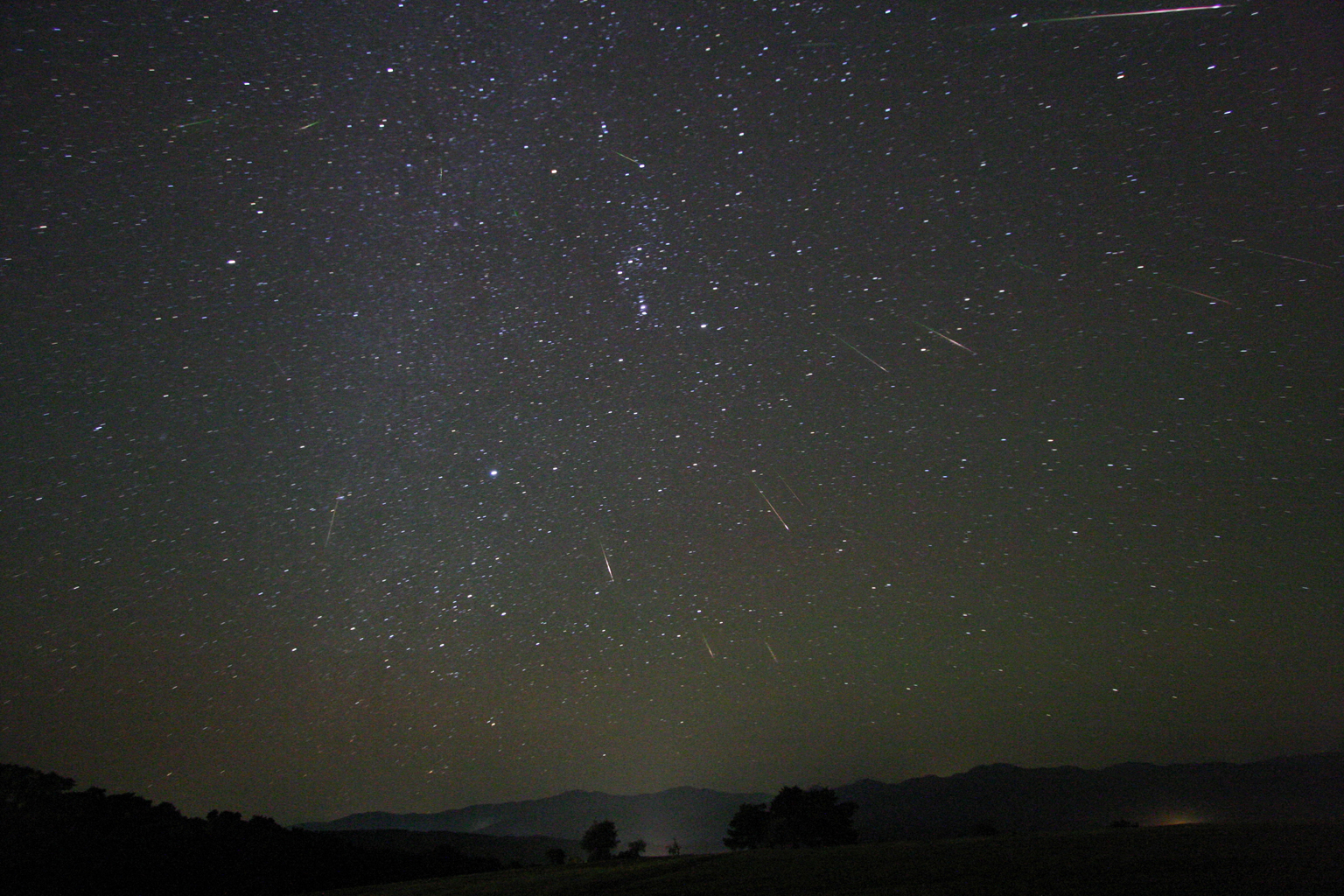
Meteor Shower


Another beautiful picture from Astonomy Picture of the Day.

New word: Aleatory

Last week, October 16--20, I attended a conference on security technology where I presented a paper. At the end of the week there was a talk on the Evaluation of Risk from Acts of Terrorism. Interesting topic.

The author used the word "aleatory" and that was new one for me. Here's what it means:

1.Law. depending on a contingent event: an aleatory contract.
2.of or pertaining to accidental causes; of luck or chance; unpredictable: an aleatory element.
3.Music. employing the element of chance in the choice of tones, rests, durations, rhythms, dynamics, etc.
(From Dictionary.com Click here for the definition.)

Makes sense, and I thought I'd pass along my new vocabulary word.

Thursday, October 12, 2006

Pamphlets for publishing

I ran across this site, or publisher really, from checking out a political blog that linked to a what I thought would be a book. The book, that really is a pamphlet of some sort, costs $10.00. Pretty cheap today so I looked a little closer. The publisher is "The New Pahphleteer" and a Yahoo! search led me to this site (see link above).

The site is for people to get ideas out in a short pamphlet instead of, or in supplement to, a long book. It's a great idea because I think people will read a pamphlet, take away an idea or two, and them move on to the next topic. We're so busy today, so bombarded with talk, television, pundits (some of whom are not even close to experts) that we have little time to read and digest ideas.

A pamphlet is a good way to stay informed within the short time we have to read.

Friday, October 06, 2006

New Blogger

Google has a new beta version for blogs. I just switched to it and am trying it out.

Wednesday, October 04, 2006

Worthless feat

A Japanese man recites pi to 100,000 digits. Is this not a totally worthless feat?

I'll tell you what would have been impressive: If he had calculated the digits instead of reciting them from memory. Now that would have been something, but again, not much.