Powered By Blogger

Tuesday, October 31, 2006

Hubble is saved!

NASA's most famous observatory, the Hubble Space Telescope, will get a much anticipated life extension after all. NASA Administrator Michael Griffin announced on Tuesday that a space shuttle will be sent to upgrade Hubble and add a few years to the lifetime of the venerable queen of the sky.

"We are going to add a shuttle servicing mission to the Hubble Space Telescope to the shuttle's manifest to be flown before it retires [in 2010]," Griffin said to applause at NASA's Goddard Space Flight Center in Greenbelt, Maryland, US.

The move, though not unexpected, still had astronomers on the edge of their seats. The telescope is enormously popular and has brought back a wealth of data since its launch aboard a space shuttle in 1990.

"The Hubble Space Telescope has been the greatest telescope since Galileo invented the first one," said US Senator Barbara Mikulski, who pushed NASA to reconsider a final servicing mission.

Now we can find out ever so more about the cosmos. Kudos to NASA for a good decision.

Thursday, October 26, 2006

Sexsomniac

THE first time it happened, Lisa Mahoney woke up to her boyfriend trying to have sex with her. "What are you doing?" she said, pushing him off.

"You started it," he said.

A few years later, a friend of hers crashed in her bed one night. The next morning he told her that she had made sexual advances toward him in her sleep.

Now, eight years after the first incident, Mahoney has a different boyfriend. She attacks him nearly every night they share a bed, aggressively trying to initiate sex - and remembers none of it in the morning.

This is strange but I'm sure it's quite true.

If you have ugly children, you're beautiful

Sexy males sire dowdy daughters and attractive females bear insipid sons – in fruit flies, at least.

This perverse pattern of inheritance may be one reason why not all individuals are highly attractive. It may even help explain why many of the showiest sexual displays are found in birds and butterflies, rather than other organisms.

The paradox arises because many of the traits that enhance a male's reproductive success are detrimental to female success, and vice versa. For example, female flies that devote a lot of time to feeding may have more energy to put into egg-laying, whereas males may do better spending more of their time mating instead.

So, let's hope the converse isn't true: If you have beautiful offspring, does that mean you're ugly?
I have three beautiful children, I guess I know why now.

Birth control: IUDs better than the Pill?

IT'S a tricky question for women in stable relationships. Do you stay on the pill, even though prolonged use slightly raises the risk of heart disease and other conditions, or do you switch to a less effective contraceptive? Now it seems there is an alternative.

Anneli Pouta at the University of Oulu, Finland, and colleagues studied 2814 women, all aged 31, taking the combined pill, no hormonal contraceptive or fitted with an intrauterine device (IUD) that releases small doses of progesterone into the womb.

Women on the combined pill had higher blood pressure, cholesterol and insulin levels than those who were not. Women fitted with IUDs, which are more than 99 per cent effective at preventing pregnancy, had none of these problems, probably because hormones are released locally rather than into the general circulation, Pouta says.

So, for young women the pill is fine. After the age of 40 the IUD seems the better choice.

Mars Rover: Getting moving


The Mars rover is starting to move again after spending the Martian winter hunkered down. Above is a panaromic picture of the red planet.

Wednesday, October 25, 2006

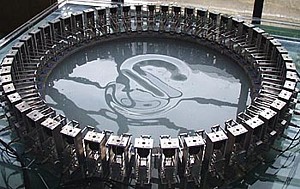
Printing on water

I forgot to post this. The link is from an email and I found that email tonight while sorting out my folder.

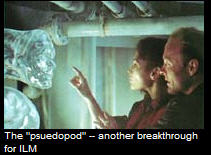
Just looking at this, a letter on the surface of water, gives me chills. Do you remember the movie The Abyss? Remember the scene where the deep sea creatures manipulate water, "at the molecular level" to quote one character?

Carl Sagan Videos

Click the link to start to view Carl Sagan's Cosmos series television shows.

Enjoy!

(hat tip: Ilachina)

Science: Professionals only?

Here's an article from Slate magazine where a sociologist, Harry Collins, was able to answer questions on gravitational waves as well as researchers in the field.

In a recent experiment of his design, British sociologist Harry Collins asked a scientist who specializes in gravitational waves to answer seven questions about the physics of these waves. Collins, who has made an amateur study of this field for more than 30 years but has never actually practiced it, also answered the questions himself. Then he submitted both sets of answers to a panel of judges who are themselves gravitational-wave researchers. The judges couldn't tell the impostor from one of their own. Collins argues that he is therefore as qualified as anyone to discuss this field, even though he can't conduct experiments in it.

The article (weakly) argues that maybe non-scientist can participate in scientific debates and understand science. This idea though is very misleading.

To begin, the idea that non-scientists cannot debate with scientists is true. To truly debate the merits of a theory (not a theorem that is true or is not true, and please don't post about Godel!) each debater needs to know the theorem and have an insight into the field.

But, and here's the point, if the so-called non-scientist knows enough to debate other scientists, then he's not a non-scientist at all. He's a scientist, pure and simple. One need not have a degree to be a scientist. What's more, one doesn't have to know mathematics to be a scientist either.

(Hat tip: Ilachina)

Monday, October 23, 2006

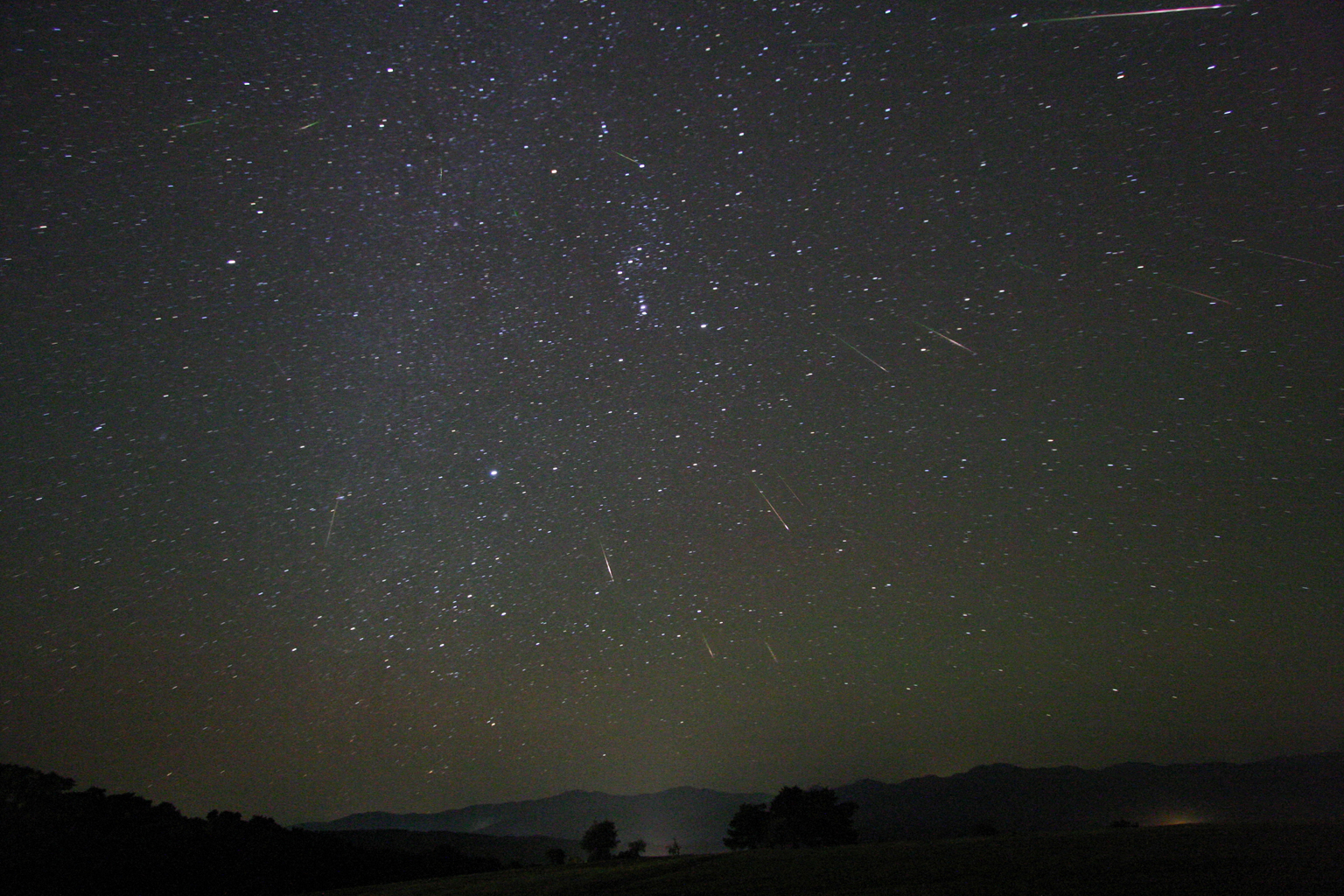
Meteor Shower


Another beautiful picture from Astonomy Picture of the Day.

New word: Aleatory

Last week, October 16--20, I attended a conference on security technology where I presented a paper. At the end of the week there was a talk on the Evaluation of Risk from Acts of Terrorism. Interesting topic.

The author used the word "aleatory" and that was new one for me. Here's what it means:

1.Law. depending on a contingent event: an aleatory contract.
2.of or pertaining to accidental causes; of luck or chance; unpredictable: an aleatory element.
3.Music. employing the element of chance in the choice of tones, rests, durations, rhythms, dynamics, etc.
(From Dictionary.com Click here for the definition.)

Makes sense, and I thought I'd pass along my new vocabulary word.

Thursday, October 12, 2006

Pamphlets for publishing

I ran across this site, or publisher really, from checking out a political blog that linked to a what I thought would be a book. The book, that really is a pamphlet of some sort, costs $10.00. Pretty cheap today so I looked a little closer. The publisher is "The New Pahphleteer" and a Yahoo! search led me to this site (see link above).

The site is for people to get ideas out in a short pamphlet instead of, or in supplement to, a long book. It's a great idea because I think people will read a pamphlet, take away an idea or two, and them move on to the next topic. We're so busy today, so bombarded with talk, television, pundits (some of whom are not even close to experts) that we have little time to read and digest ideas.

A pamphlet is a good way to stay informed within the short time we have to read.

Friday, October 06, 2006

New Blogger

Google has a new beta version for blogs. I just switched to it and am trying it out.

Wednesday, October 04, 2006

Worthless feat

A Japanese man recites pi to 100,000 digits. Is this not a totally worthless feat?

I'll tell you what would have been impressive: If he had calculated the digits instead of reciting them from memory. Now that would have been something, but again, not much.

Thursday, September 21, 2006

New Scientist: Is your pet in pain?

Animals are being misdiagnosed for pain. Don't believe it, well, there's a questionairre to complete so you can see:
Wiseman-Orr and Reid have designed a simple one-page questionnaire that can be used to evaluate whether a dog is in pain, an approach they say can be used to objectively evaluate the welfare of any animal in any setting.
You know, if my pet is in pain then I take it to my vet to be put down. That's the way to handle it. It's cold but it's the right thing to do.

Sex Selection: It's available now (and has been)

More people are choosing to choose the sex of their baby than have before. It's still a small percentage, but the trend is clear. With in-vitro fertilization becoming ever more common, couples can easily choose the gender of their future child, and couples are doing so.

For the most part, couples are screening embryos for the right reasons - to avoid passing on dreadful diseases, said Dr. William Gibbons, who runs a fertility clinic in Baton Rouge, La., and is president of the Society for Assisted Reproductive Technology, which assisted with the survey.

"There are thousands of babies born now that we know are going to be free of lethal and/or devastating genetic diseases. That's a good thing," he said.

However, the survey findings also confirm many ethicists' fears that Americans increasingly are seeking "designer babies" not just free of medical defects but also possessing certain desirable traits.

I don't know how to take this, exactly. On the one hand, the ideal way to conceive a child is nature's intended way (that has evolved over MANY years) with natural sex. On the other hand, if couples must have in-vitro fertilization (and I have no sympathy for those who do it who don't have to) why not pick what you want? Afterall, most of the fertilized embroyos will not be kept, so pick the ones you want. Still, it a terribly slippery slope and one that's being greased everyday.

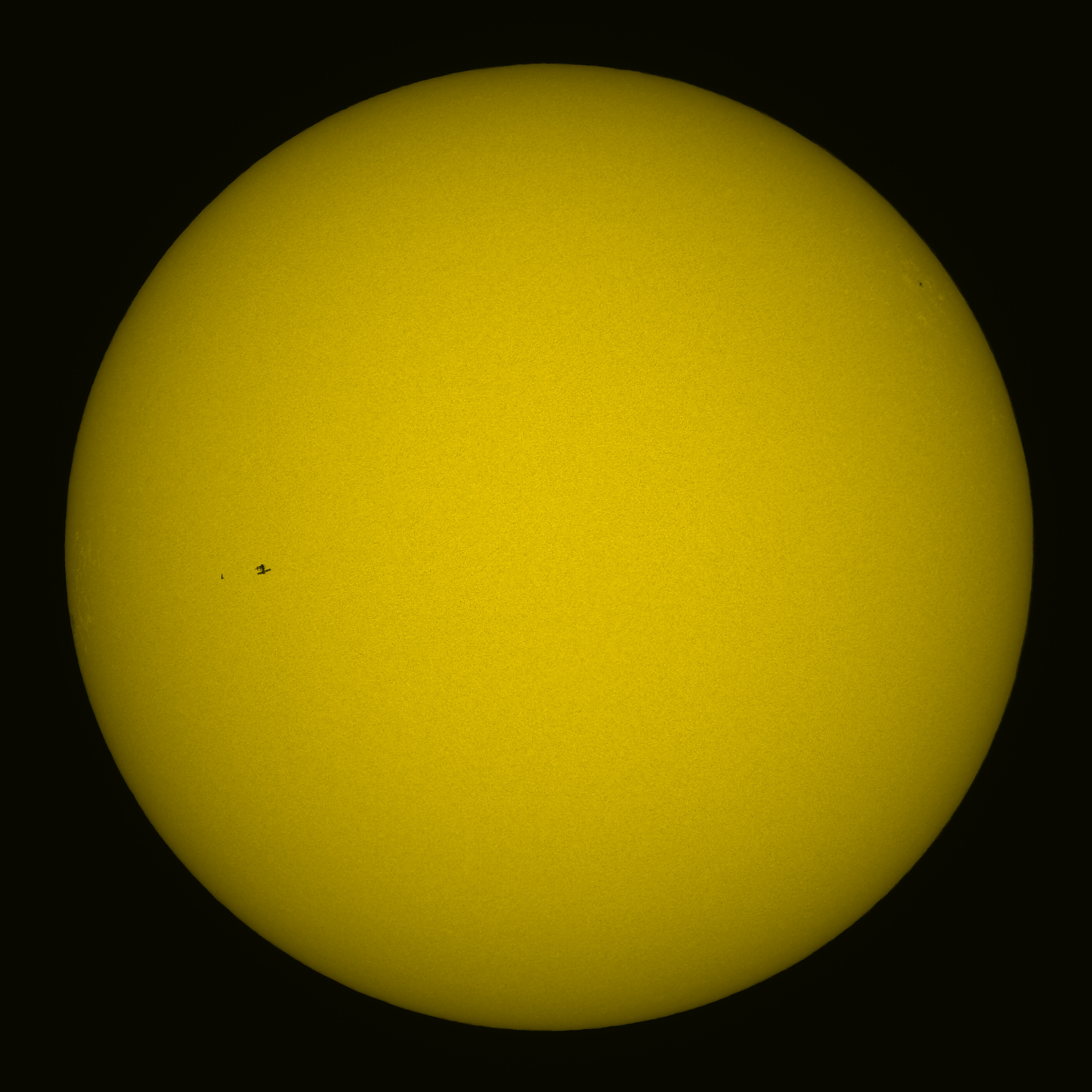
Sunshine makes me happy


While hard to see in this reduced photograph, the two black spots against the shining sun at the International Space station (on the right) and the shuttle Atlantis (on the left). Atlantis has just undocked and moved approximately 200-meters from the space station. This photo was taken near Mamers, Normandy.

Wednesday, September 20, 2006

Women in Science Report

This article from the New York Times is so biased as to be unbelievable. It's about a study from the National Academy of Sciences that concludes there's too much bias in the scientific community for women to succeed. Now if that isn't hogwash, I don't know what is.

I won't comment on the fact that all but one person on the 18-member panel (that's 18, mind you) were women. Imagine such a panel of men finding that the scientific community is biased against men, you'd hear howling of prejudice claims from all corners. No, I won't comment about that.

I will comment that while I was in undergraduate school and then graduate school for 6-1/2 years (Master's and Ph. D.) women got special attention. They were held to lower standards than the men, not always, but sometimes. Plus, when it came time to look for a job, colleges heavily recruited every woman but didn't recruit men much at all. If there was bias, it was directly against men and in favor of women.

And here's more, women who go into academia are then gagainst iven special grants and financial support exclusively for women. How is that bias against women?

The truth is that science is difficult. It's difficult work, difficult to find funding, difficult to balance the demands of a job with a family, and difficult to keep at it, year after year. If the Nataional Academy of Sciences wants to know why more women aren't in science, they should look at social demands, not the environment of the scientific community.

Tuesday, September 19, 2006

Capacitors for Super Batteries

"Nanotube filaments on the battery's electrodes" from the link above.

Researchers at MIT at trying to make batteries that can be very quickly charged and be useful for laptops or cell phones. The key, they believe, is to fabricate capacitors with extremely large surface areas. Capacitors store electricity as an electric field between the plates of the capacitor. In order to increase the energy, the researchers are adding nanoscale fibers to the plates. These fibers increase the surface area and thereby increase the amount of electric charge that a capacitor can store.

That's a clever idea, but I wouldn't throw away the batteries you have just yet. These sorts of ideas seem terrific but in practice something usually (but not always!) happens to make the invention less than stellar. Keep your lithium rechargeables around; they'll still plenty useful.

Tuesday, August 29, 2006

On Perelmand and Yau about who proved the Poincare Conjecture

This article (see the link above) tells a great story of some of the personalities of the mathematicians involved in proving the Poincare Conjecture. It's worth the time to read it all.

Monday, August 28, 2006

The Math Was Complex, the Intentions, Strikingly Simple


George Johnson writes in the New York Times:
[M]athematics has been infused with the legend of the mad genius cut off from the physical world and dwelling in a separate realm of numbers. In ancient times, there was Pythagoras, guru of a cult of geometers, and Archimedes, so distracted by an equation he was scratching in the sand that he was slain by a Roman soldier. Pascal and Newton in the 17th century, Gödel in the 20th — each reinforced the image of the mathematician as ascetic, forgoing a regular life to pursue truths too rarefied for the rest of us to understand.

Last week, a reclusive Russian topologist named Grigory Perelman seemed to be playing to type, or stereotype, when he refused to accept the highest honor in mathematics, the Fields Medal, for work pointing toward the solution of PoincarĂ©’s conjecture, a longstanding hypothesis involving the deep structure of three-dimensional objects. He left open the possibility that he would also spurn a $1 million prize from the Clay Mathematics Institute in Cambridge, Mass.

Unlike Brando turning down an Academy Award or Sartre a Nobel Prize, Dr. Perelman didn’t appear to be making a political statement or trying to draw more attention to himself. It was not so much a medal that he was rejecting but the idea that in the search for nature’s secrets the discoverer is more important than the discovery.

“I do not think anything that I say can be of the slightest public interest,” he told a London newspaper, The Telegraph, instantly making himself more interesting. “I know that self-promotion happens a lot and if people want to do that, good luck to them, but I do not regard it as a positive thing.”

Johnson goes on to give a half-baked, half hearted attempt to describe Perelman's refusal to accept the Fields Medal for his solution to the Poincare Conjecture. Unfortunately, Johnson really misses the point. Here is a man who just wants to think about mathematics and study nature with his own intellect. It is a state of being few of us will ever reach yet we ought to be in awe of anyone who can do this.

In a society steeped in self-promotion for the slightest contribution to any field, we find a man who contributed to the Poincare-conjecture, proved it, and wants to leave that knowledge to others without interference. This is perhaps the most noble gesture we are likely to ever find.

The only person I know who comes close to this but misses by much is Richard Feynman who wanted to turn down the Nobel prize in physics because it would interfere with his work. Feynman accepted the prize, bought a second house with the money, and continued to work.

Perelman is not interested in a second house, wants to live where he is, and be left alone. Is there anything wrong with that?